

Spider Vein Treatment
Spider vein treatment is performed via microsclerotherapy, but before we proceed with information about treatment, what are spider veins? At one end of the spectrum, small spider and thread veins are the smallest varicose veins. These are usually of most concern to women and can occur anywhere on the legs, but more often on the inside of the knee and outer thigh.
Spider and thread veins can give rise to symptoms such as itching, burning and pigmentation. In people with spider veins, there may be underlying varicose veins and if present, these need to be treated first before thread veins can be successfully treated.
Thread and spider veins may be the first signs of more serious underlying venous disease.
Reticular Veins
Just below the surface of your skin you may notice reticular veins which are larger vessels that are dark blue in colour. It is important to treat these vessels along with the spider veins as they often act as feeder veins for them.
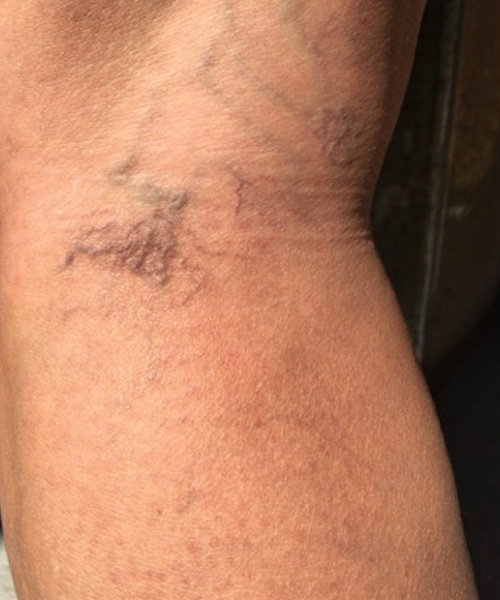
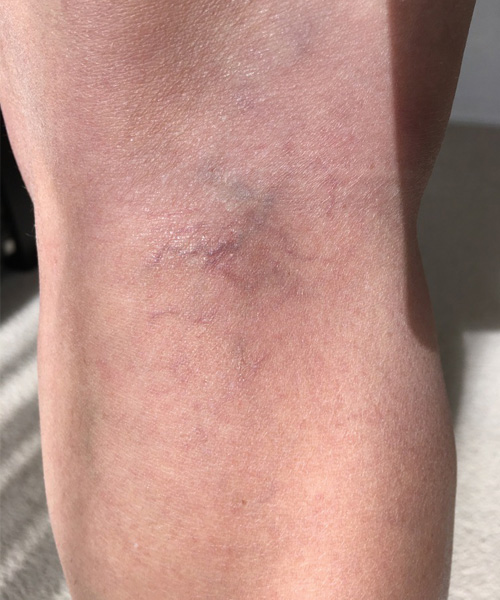
Spider Vein Treatment Before and After (Microsclerotherapy)
The after image is the appearance after just one treatment of microsclerotherapy in which one can expect a 50-75% improvement. The usual patient would benefit from a further one or even two treatments to get an even better outcome.
The outcome of vein treatments can differ among patients, and there are inherent risks associated with all procedures. It is important to note that we cannot achieve identical or comparable results for every patient, given the unique nature of each individual. Therefore, we cannot provide any assurance, commitment, or guarantee regarding such outcomes.
Request a Consultation
For all vein appointments all you need to bring is your Medicare Card with no referral needed. We also supply and fit compression stockings. To discuss treatment and pricing options you can contact us here.
What causes Spider Veins?
Spider veins, much like varicose veins can surface at any time, and several factors contribute. The most common cause is genetics, usually a parent or grandparent. Oestrogen also promotes the growth of spider veins. This is why more women than men have spider veins. Pregnancy is also a major contributor to spider vein formation. Lifestyle factors such as diet and exercise make a large difference, with a sedentary lifestyle and high fat diet being major causes.
You Don't Have to Live with Problem Veins.
Successful treatment can allievate or eliminate the symptoms. You may even notice improvements within 1-2 days of beginning treatment.
No referral needed
No surgery required
Medicare Rebates
Microsclerotherapy Spider Vein Treatment
Microsclerotherapy is the treatment of spider veins using a sclerosant liquid or foam which is injected into the small veins, causing them to close. A very fine needle is used to inject the sclerosant into the spider veins. We inject the veins with the assistance of a magnifying light which allows better visualisation of the vessels. In the past, vascular laser was used as a spider vein removal treatment, and although it worked very well on facial veins, the greater pressures in the leg meant it was not effective in treating leg spider veins. We no longer offer this treatment. Microsclerotherapy is an internationally proven technique and the gold standard in spider vein treatment.
At the Crows Nest Cosmetic & Vein Clinic we generally treat spider veins by injecting a solution called Polidocanol. The solution was initially developed as a local anaesthetic but is now used exclusively to treat varicose and spider veins. It has advantages over the older treatments like hypertonic saline, in that it is less painful, and has a lower chance of skin ulceration. It causes less inflammation than Fibrovein sclerosant, which we use to treat the bigger varicose veins during ultrasound guided sclerotherapy.
Booking an Appointment at our Clinic
For all vein appointments all you need to bring is your Medicare Card with no referral needed. We also supply and fit compression stockings. To discuss treatment and pricing options you can contact us here.
Booking an Appointment at our Clinic
For all vein appointments all you need to bring is your Medicare Card with no referral needed. We also supply and fit compression stockings. To discuss treatment and pricing options you can contact us here.